
The Parable of the Sower
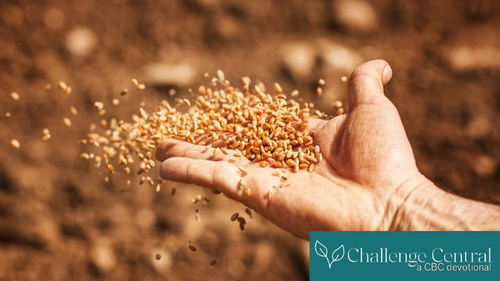
Often in conversations with friends, family, or coworkers, discussion turns to the many problems of this world. The frustration many of us instinctively have with infrastructure or technology, with poor political decision making, with the moral choices of the men and women around us, or with the actions and behaviours of our children presents an interesting picture of human psychology. We tend to prefer answers that are immediate and practical, and perhaps this is because of what our world values today. But when we do this, we frame our world as a series of problems that exist like objects outside of us. If all problems are external problems, it is much easier to imagine how they might be resolved or put right.
It is far less work for a physician to treat the symptoms of a patient’s problem than to treat its cause, yet treating its cause will prove to be the only real way to resolve his problem.
Perhaps we have grown too used to looking at the symptoms in this world rather than any underlying root or cause. Jesus diagnoses the real human problem in His parable of the sower and the seed. The greatest problem we face is not that our lives do not produce greater affluence or that we are not nicer people. If it were, then we could simply set about building better careers or becoming better people. Indeed, our entire Western world seems to have made a large business out of convincing people that wealth and niceness are the real goals of human life.
Jesus paints a very different picture when He observes that we often do not attend to the ways our hearts receive or reject God’s Word, as the soil receives or rejects the seed that is planted. Jesus assumes that people are always in need of attending to the internal condition of their hearts because these conditions could easily become rocky or overcrowded with desires (Matthew 13:19-22), much as a farmer, in order to produce a good crop, must always carefully attend to the conditions of the soil or exposure to sunlight or other elements.
So many things that happen in our lives remind us of the work that goes into creating something good and beautiful, like a garden full of fruit and colour. Many of us spend years of our lives at school, years working toward raising a family, and years toward developing skills that prepare us professionally in one way or another. Some of us may dedicate weeks or months of our time building something or completing a project at work.
And it is remarkable how alike these very natural human activities are to the real purpose and mission of the Christian life, as Jesus describes it. Jesus reminds us that one of the great tasks that lies before us is the cultivation of good soil – a soil capable of receiving and embodying the Word of God. Jesus Christ died to save us from our sins, but we must attend carefully to the work He began in us.
In the overwhelming craze to direct our attention to a world and its goods, let us direct our attention first inwardly to the soil and affections of the human heart. What do we truly love? Perhaps some of us are suffering or broken-hearted today. Perhaps we feel caught in the trap of life from which we can find no escape. External conditions may simply be beyond our control. Perhaps some of us have allowed other desires to replace the love we should have for Jesus. In these moments and seasons of our lives, let us not allow bitterness or self-love to crowd out the joy in the work Christ Jesus began in us. If we love the Lord, and if we love one another, then we can rejoice in the understanding that everything is going to be well with us.
Recent
Archive
2026
November
Categories
no categories